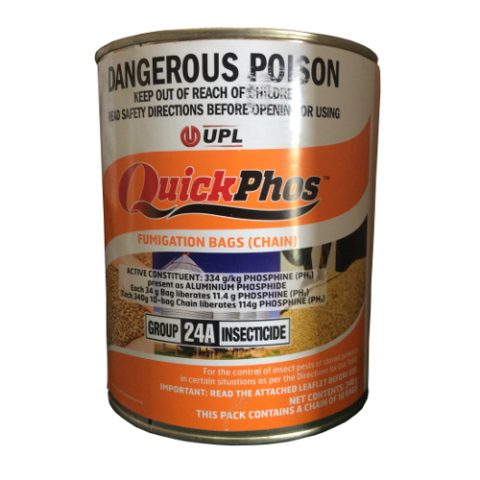
Product details
Formulation
This is a fumigation blanket. It contains aluminium phosphide, which gives off phosphine gas when it comes into contact with moisture in the air. Group 24A insecticide.
- Type: fumigation blanket that generates phosphine gas
- Insecticide group: 24A
- Other ingredients listed on the SDS: ammonium carbamate, urea and zinc stearate
- Appearance: greenish-grey, with a strong garlic, carbide or rotting-fish smell
Overview
QuickPhos Fumigation Blanket is a phosphine fumigant from UPL Australia. It controls insect pests of stored products, such as grain and other commodities, in sealed storage. It is registered with the APVMA under approval number 47322/136002.
The blanket gives off phosphine gas once it is exposed to air. The gas moves through the stored product and kills eggs, larvae, pupae and adults in sealed enclosures. Each blanket is a fixed size and releases a known amount of phosphine, so Pest Management Professionals can work out the dose by counting blankets.
UPL adds stabilising and binding agents so the phosphine is released gradually rather than all at once. Blankets and bags can be handled by hand straight out of the container. QuickPhos also comes as tablets and bags, so you can choose the format that suits each job.
Product Highlights
- Known output per blanket: each 1.7 kg blanket releases 568 g of phosphine, which makes dosing simple to plan and record.
- Gradual gas release: stabilising and binding agents slow the rate at which phosphine is produced.
- Simple to place and remove: there are no loose tablets to spread or collect afterwards. UPL publishes a deactivation and disposal procedure for spent blankets.
Target pests
- Insect pests of stored products, at all life stages (eggs, larvae, pupae and adults)
- UPL's QuickPhos range literature names these weevils: coffee bean weevil, granary weevil, maize weevil, pea weevil and rice weevil. Check the label's Directions for Use table for the species approved for the blanket.
Where to use
Use only in sealed enclosures that hold stored products, in the situations listed in the label's Directions for Use table.
- Sealed silos and grain storage
- Grain sheds and other sealed storage areas
- Mung beans and sorghum are included on the current label (a 2022 APVMA variation added mung beans and shortened the sorghum withholding period)
Application
The blankets release phosphine gas when they are exposed to air. Place them in a gas-tight enclosure and keep it sealed for the full fumigation period set out on the label. Then ventilate before anyone handles or uses the commodity.
- Check expiry before you start. Do not begin fumigation if the product has expired.
- Plan the timing. If the grain or commodity will need to be moved before the Total Fumigation Period ends, think again about whether to fumigate now.
- Blankets can be handled by hand straight from the container.
- Be careful with containers while applying, during the exposure period and while ventilating. Workers, transport staff and bystanders can be exposed to phosphine at any of these stages.
- Check your state's fumigation licensing requirements before carrying out phosphine fumigation.
- Deactivate spent blankets following UPL's procedure 'Deactivation and Disposal of Aluminium Phosphide Blankets and Bags (Chains)'.
Safety
Signal heading: DANGEROUS POISON. Poisons schedule: S7. Hazchem code: 4W.
Classed as a hazardous chemical and a dangerous good. The blanket releases toxic, flammable phosphine gas on contact with water or moist air. Read the label safety directions and the current SDS for PPE and respiratory protection requirements before opening or using the product.
FAQ
- Will it work in storage that isn't sealed? No. Phosphine only reaches lethal levels in sealed enclosures. Even with a proper seal, some eggs and pupae can be harder to kill, so keeping the enclosure gas-tight for the full fumigation period matters.
- What about phosphine-resistant insects? The label warns that some naturally occurring insect strains are resistant to QuickPhos, and UPL accepts no liability if resistant insects survive. Follow the label's resistance management advice for Group 24A insecticides and keep the seal and exposure time correct.
- How do I dispose of spent blankets? Deactivate them using UPL's procedure for aluminium phosphide blankets and bags. Once properly deactivated, the material is covered by a separate SDS that classes it as non-hazardous and not a dangerous good.
Pack Size
3.4 kg net contents (each blanket is 1.7 kg).
How to order: Garrards product code QUICK/BLANK.