
Redback spider control is a regular request for Australian pest managers, and it is a job where a quick general spray usually fails. Redbacks live and breed in wall cavities, inside tubing and among stored goods where surface treatments never reach. This guide covers identification, what a bite does, where redbacks nest and how to carry out a treatment that actually gives control.

Identifying the redback
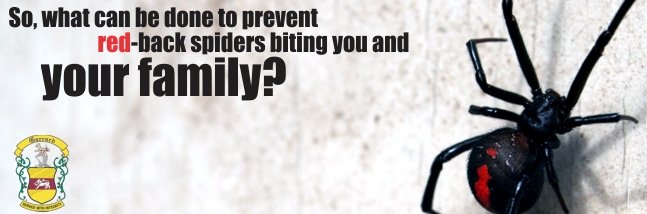
The redback (Latrodectus hasselti) is found throughout Australia, including in urban areas of every capital city. The female is the one people recognise: a glossy black body with a distinctive red or orange stripe on the upper abdomen and a rounded abdomen about the size of a large pea. The male is much smaller, light brown with white markings, and is rarely noticed. Juveniles are paler with additional white markings and can be mistaken for other spiders.
Redback bites: what actually happens
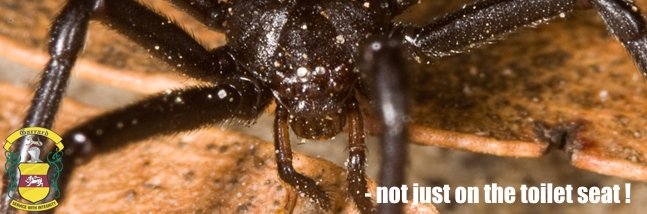
Historically, the most common site of a redback bite was the male genitals, thanks to spiders sheltering under the seat of the outdoor ‘thunder-box’. Redbacks are now found in so many places that people can be bitten on any part of the body. Before an effective antivenom was developed in 1956, 12 people in Australia were reported to have died from redback bites; no one has died from a redback bite since.
Only the female bites people; the male’s fangs are too small to penetrate human skin. Even a small female can cause extreme discomfort. The puncture marks are usually visible, but the venom is normally slow to act, causing a slight tingling within an hour with the full effect sometimes taking days to become apparent. Symptoms range from swelling, stiffness and pain around the bite through to sweating, nausea and, in severe cases, pain spreading through the limbs and body.
Redbacks are not an aggressive spider. They only bite when disturbed and think they are catching prey or being attacked.
First aid
Australian first-aid guidance for redback bites is to apply a cold pack to the bite site to relieve pain and seek medical advice if symptoms are more than mild. A pressure immobilisation bandage is not used for redback bites. Advise clients to call Triple Zero (000) if the person bitten is a child, is elderly, or develops severe symptoms.
Where redbacks live
Redbacks build untidy, tangled webs. The upper part is sticky to catch prey; the lower living quarters are not sticky and lead to a sheltered retreat. Typical sites include:
- Against walls, fences and letterboxes.
- Children’s play equipment and under outdoor seats, including the outside toilet.
- Stored items, pot plants, garden sheds and stacked materials.
- Wall and roof cavities.
- Inside tubing such as the frames of outdoor furniture and trampolines.
- Meter boxes, gas bottle covers, vehicles and machinery left standing.
It is worth having a good look around. If you see one redback web there will be more, and simply removing the webs will not give control. The spiders breed in places you will not find without a thorough search, and if those areas are not treated they become the source of the next infestation.
Why redback control is search-and-destroy
Redback control is a case of search-and-destroy rather than control by a general spray treatment, for two reasons:
- Harbourage is concealed. Redbacks in wall voids, tubing and stored goods are very difficult to treat without specialised equipment and will not be reached by a perimeter spray.
- Limited surface contact. A redback spends most of its life on its web, not walking across treated surfaces, so a residual treatment on walls and paths often never touches the spider.
Step-by-step management
- Inspect the whole property in daylight and, ideally, again with a torch after dark when redbacks sit at the mouth of the retreat. Note every web, egg sac and harbourage.
- Advise the client to reduce harbourage: remove clutter and stacked materials, store goods off the ground, and cap or seal open tubing on furniture and play equipment.
- Treat each web and retreat directly so the spider and egg sacs are contacted, rather than relying on broad surface spray.
- Treat concealed harbourage such as wall and roof voids, weep holes and subfloor areas using equipment designed for those spaces.
- Remove webs and egg sacs after treatment so new activity is obvious at the next inspection.
- Schedule a follow-up. Redbacks reinfest by being carried in on goods or by ballooning on the wind, and a spider that arrives later has little contact with surfaces, so the original treatment may not control it.
Safety and compliance
- Use only APVMA-registered products labelled for spiders, strictly in accordance with the label.
- Spider treatments must be carried out by a pest management technician licensed in the relevant state or territory.
- Wear the PPE specified on the label, particularly when working in roof voids and confined spaces, and provide the client with the required treatment record.
Available from Garrards
Garrards branches stock spider-labelled insecticides, dusting and void-treatment equipment, torches and inspection tools for thorough redback work. Ask your branch for advice on the right equipment for treating concealed harbourage.
Contact your local Garrards branch
Frequently asked questions
Are redback spiders dangerous?
A female redback bite can be very painful and occasionally causes serious illness, but no deaths have been recorded in Australia since antivenom became available in 1956. Seek medical advice for anything beyond mild symptoms.
Why did my spider spray not get rid of the redbacks?
Redbacks stay on their webs in concealed retreats and rarely walk across treated surfaces, so a general surface spray often never contacts them. Effective control means finding and treating each web, retreat and harbourage.
Will removing the webs solve the problem?
No. The spiders and egg sacs in wall cavities, tubing and stored goods will simply rebuild. Web removal is useful after treatment so new activity is easy to spot.