
Ticks in Australia are a recurring concern for householders, outdoor workers and the pest managers who service bushland-fringe properties. Most bites cause only minor irritation, but some people develop serious allergic reactions and the paralysis tick can cause dangerous toxic effects. This guide covers tick behaviour, bite prevention, safe removal and where professional tick control fits in.

Understanding ticks
Ticks are blood-feeding parasites that live in long grass, leaf litter and bushland. They climb grass stems or low branches and wait with their front legs extended, ready to latch onto any animal or person that brushes past.
Around 850 tick species are known worldwide and roughly 75 occur in Australia. Along the eastern seaboard the species of most concern is the paralysis tick, which is associated with tick paralysis in pets and, less commonly, in people. Tick activity in Australia peaks in the warmer, more humid months, and properties backing onto bush, parks or long grass are at the highest risk.
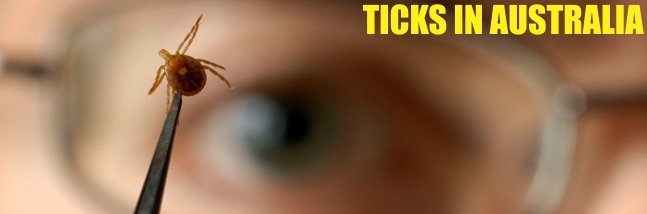
Tick-borne illness in Australia
Ticks can transmit a range of illnesses, and larvae and nymphs are extremely small, so a bite can easily go unnoticed. Conditions associated with tick bites in Australia include:
- Tick paralysis, caused by toxins injected by the paralysis tick as it feeds.
- Allergic reactions, ranging from local swelling to anaphylaxis in sensitised people.
- Tick typhus and related spotted fevers, bacterial infections recorded along the east coast and in Bass Strait.
- Lyme disease: there are no official Australian statistics for Lyme disease (borreliosis) and its presence here remains debated. A Lyme-like illness was reported in the Newcastle region of NSW in 1982. Garrards’ view is that it is better to be proactive than reactive.
Anyone who develops a rash, fever, weakness or difficulty walking after a tick bite should see a doctor promptly. For poisoning advice call the Poisons Information Centre on 13 11 26.
Preventing tick bites
The most reliable way to prevent tick bites is to avoid tick-infested areas during peak season. Where that is not practical:
- Wear a long-sleeved shirt and long pants, with pants tucked into socks.
- Wear a wide-brimmed hat and light-coloured clothing so ticks are easier to spot before they reach skin.
- Apply a repellent containing DEET (diethyl-meta-toluamide) or picaridin to skin and clothing, and reapply according to the manufacturer’s directions.
- Shower within two hours of coming indoors; this has been shown to reduce the risk of a tick attaching.
- Tumble-dry worn clothing on high heat for at least an hour to kill any ticks carried home.
After leaving a tick area, remove all clothing and check the entire body. Pay particular attention to behind the ears, the back of the head and neck, under the arms, inside the navel, behind the knees, between the legs and around the waist.
How to remove a tick safely
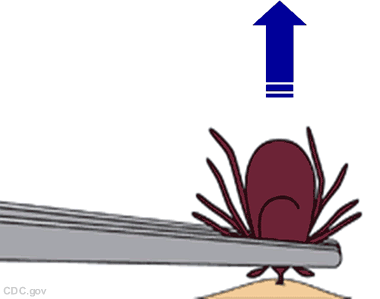
Remove a tick as soon as you find it. If you are known to be allergic to ticks, seek urgent medical attention before attempting removal.
- Use fine-pointed tweezers to grasp the tick as close to the skin as possible.
- Pull straight out with steady, gentle pressure. Do not twist: a tick’s mouthparts are barbed, not spiralled, so twisting does not help.
- Apply disinfectant to the bite site after removal.
- If you cannot remove the tick, or you develop any symptoms afterwards, seek medical attention.
Common mistakes
- Do not try to kill the tick first with methylated spirits or other chemicals. Irritating the tick can cause it to inject more toxin.
- Do not use folklore remedies such as matches or pins; they irritate the tick and make complete removal harder.
Where professional tick control fits in
Personal protection reduces bites but not the tick population on a property. Licensed pest managers can assess tick harbourage (long grass, leaf litter, dense garden beds and the bushland edge), recommend habitat changes such as mowing and clearing litter, and apply APVMA-registered products according to label directions where treatment is warranted. State licensing applies to all commercial pesticide application.
Frequently asked questions
Which tick is the most dangerous in Australia?
The paralysis tick, found along the east coast, is the species of greatest concern because its saliva contains toxins that can cause paralysis in animals and, occasionally, people.
Does Lyme disease exist in Australia?
There are no official Australian statistics and the question is still debated. Discuss any unexplained illness after a tick bite with a doctor.
Available from Garrards
Garrards supplies pest managers with tick control products, application equipment and PPE through branches across Australia. Contact your local branch for the latest options in tick management.
Contact your local Garrards branch
Frequently asked questions
Which tick is the most dangerous in Australia?
The paralysis tick, found along the east coast, is the species of greatest concern because its saliva contains toxins that can cause paralysis in animals and, occasionally, people.
Does Lyme disease exist in Australia?
There are no official Australian statistics and the question is still debated. Discuss any unexplained illness after a tick bite with a doctor.