
The Sentricon termite baiting system uses the termite colony’s own social behaviour against it. Instead of flooding soil with liquid termiticide, Sentricon stations placed around a building intercept foraging termites and feed them a bait containing hexaflumuron, which is carried back to the nest and shared until the whole colony collapses. For Australian pest managers it offers a low-disturbance, low-chemical option for colony elimination and ongoing monitoring.
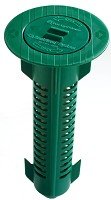
How Sentricon works
Sentricon is built around two termite behaviours: foraging and food sharing.
- Palatable bait. Sentricon II Termite Bait, for internal and external use, is a highly palatable, flexible cellulose food substrate impregnated with the active ingredient hexaflumuron.
- Trophallaxis. Worker termites feed on the bait and pass the hexaflumuron throughout the colony as they exchange food with nest-mates – a process called trophallaxis.
- Moult failure. Hexaflumuron is a chitin synthesis inhibitor. Termites moult repeatedly as they grow or when their cuticle is damaged; exposed termites cannot produce chitin at their next moult and die.
- Colony elimination. As the workforce collapses the colony can no longer feed itself, leading to elimination of the entire colony rather than just the termites at the point of attack.
Easy to live with
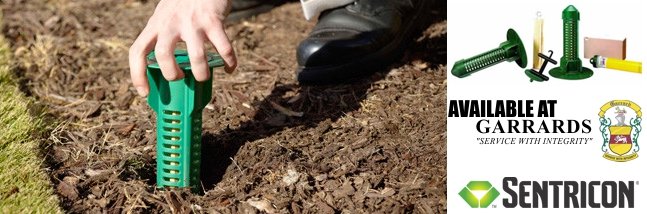
With small stations placed discreetly around a home, Sentricon is far less disruptive than a traditional liquid chemical treatment:
- No drilling of floors or foundations.
- No digging or trenching.
- No chemical solution injected into the ground under and around the home.
- No tank trucks of chemical solution.
- No scheduling hassles for the occupant.
Environmentally responsible
Where a liquid treatment may use large volumes of chemical solution, Sentricon uses only a few grams of active ingredient, applied when and where it is needed. Above-ground (AG) bait is placed directly where active termites are found and removed once the colony is eliminated. In-ground (IG) bait is introduced only when termites are detected in a station; afterwards the IG stations and the pest manager continue monitoring for new termite attack.
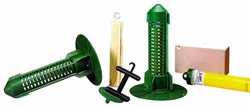
Sentricon system components
| Component | Purpose |
|---|---|
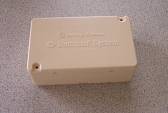 |
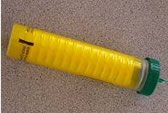
Above Ground (AG) Termite Bait – used with the IG bait (placed on top once activity is detected) or placed directly on termite leads on frames, posts, fences and similar. |
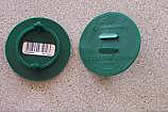 |
Top Cap – seals the station once monitors or bait are inside, preventing disturbance; includes a child-safe lock. |
 |
Soil Cover – makes the station visible and reduces the risk of predatory attack on the station. |
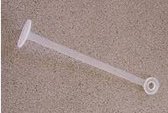 |
Monitor Extractor – lets the installer set, inspect and replace monitoring blocks. |
 |
In Ground (IG) Termite Bait – once activity is found in an IG station the bait is unwrapped, mixed with sugar water or a similar solution into a paste and placed back inside the station. |
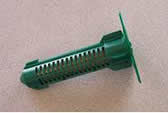 |
In Ground (IG) Station – installed to detect termites in an area and to monitor and bait infestations. |
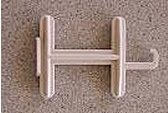 |
Station Top Cap Key – locks the top cap in place; the hook at one end gently removes monitors for inspection. |
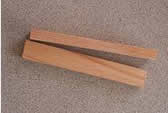 |
Monitoring Devices – each monitoring station takes a pair; they attract termites and encourage feeding so bait can be introduced. |
Where Sentricon fits in an Australian termite program
Subterranean termites, particularly Coptotermes species, cause most structural termite damage in Australia, and termite management for existing buildings is guided by Australian Standard AS 3660.2. Baiting and monitoring systems such as Sentricon suit situations where a complete chemical treated zone is impractical – slab-on-ground homes with extensive paving, sensitive environments, or clients who prefer a low-chemical approach. Stations also give the pest manager a documented, ongoing monitoring program.
Manufacturer commitment
Sentricon was developed by Dow AgroSciences, a global leader in pest-management solutions with extensive termite and entomology expertise. With continued service, Sentricon stays on guard to protect the value of the home.
Downloads
- Sentricon brochure (PDF)
- Sentricon home owner information (PDF)
- Sentricon sales brochure (PDF)
- Sentricon technical manual (PDF)
Frequently asked questions
How long does Sentricon take to eliminate a colony?
Because hexaflumuron acts at the termites’ next moult, elimination is gradual rather than immediate; the timeframe depends on colony size, season and feeding activity. Regular station inspections track progress.
Can Sentricon be used where termites are already inside a building?
Yes. Above-ground (AG) bait can be placed directly on active termite leads and workings on frames, posts and fences, while in-ground stations intercept foraging termites around the structure.
Who can install Sentricon?
Termite baiting is a professional treatment. In Australia it must be carried out by a licensed pest-management technician using APVMA-registered bait in accordance with the label and the technical manual.
Available from Garrards
Sentricon stations, monitors, AG and IG bait and accessories are available through Garrards branches. Contact your local branch for technical advice, training and current pricing.
Contact your local Garrards branch
Frequently asked questions
How long does Sentricon take to eliminate a colony?
Because hexaflumuron acts at the termites’ next moult, elimination is gradual rather than immediate; the timeframe depends on colony size, season and feeding activity. Regular station inspections track progress.
Can Sentricon be used where termites are already inside a building?
Yes. Above-ground (AG) bait can be placed directly on active termite leads and workings on frames, posts and fences, while in-ground stations intercept foraging termites around the structure.
Who can install Sentricon?
Termite baiting is a professional treatment. In Australia it must be carried out by a licensed pest-management technician using APVMA-registered bait in accordance with the label and the technical manual.