
Temprid 75 residual insecticide from Envu combines two active constituents, imidacloprid and cyfluthrin, in one concentrate for use inside and outside buildings. It is registered for the management of ants, cockroaches, spiders, fleas and bed bugs, including pyrethroid-resistant strains, and is positioned for pest managers whose reputation depends on the job staying done rather than on being the cheapest quote.

What Temprid 75 is
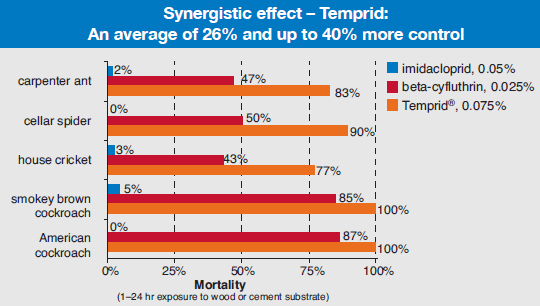
Temprid 75 is a residual insecticide concentrate containing 50 g/L imidacloprid and 25 g/L cyfluthrin. Imidacloprid is a neonicotinoid that acts on the insect nervous system through a different pathway from the pyrethroids, while cyfluthrin is a pyrethroid that provides fast knockdown. Because the two actives work in different ways, the combination is described by the manufacturer as synergistic: the pyrethroid delivers quick contact activity and the neonicotinoid continues to work on insects, such as some bed bug populations, that have developed tolerance to pyrethroids alone.

Key features and benefits
- Dual-active formulation: 50 g/L imidacloprid plus 25 g/L cyfluthrin.
- Residual control combined with knockdown from a single application.
- Labelled for ants, cockroaches, spiders, fleas and bed bugs, including pyrethroid-resistant strains.
- Registered for use in domestic, commercial, industrial and public buildings and facilities.
- Suitable for interior and exterior treatments as directed on the label.
Where and when to use it in Australia
Temprid 75 covers the everyday pest load of a general pest service. Typical Australian applications include perimeter and harbourage treatments for ants and cockroaches around homes and food premises, crack-and-crevice and skirting treatments for spiders, flea treatments in and around pet areas, and bed bug programs in hotels, hostels, aged-care and multi-unit accommodation. Bed bug work is where the dual-active approach earns its keep: pyrethroid resistance is widespread in Australian bed bug populations, and a product with a second mode of action reduces the chance of a callback.
How it fits into an IPM program
A residual insecticide is one tool, not the whole program. Inspection and correct identification come first, followed by sanitation and proofing advice for the client, then targeted application to the harbourages and travel routes the label allows. For bed bugs, combine chemical treatment with mattress and furniture inspection, laundering or heat treatment of infested items, and follow-up monitoring. Rotating between products with different modes of action, and using a dual-active such as Temprid 75 where resistance is suspected, is standard resistance-management practice.
Safety and compliance
- Temprid 75 is an APVMA-registered product and must be used strictly in accordance with the Directions for Use on the label, including the situations, pests, rates and application methods listed.
- Read the Safety Data Sheet before use and wear the personal protective equipment it specifies when mixing and applying.
- Pest control operators must hold the relevant state or territory pest management technician licence to apply this product commercially.
- Keep clients, children and pets out of treated areas until surfaces are dry, and record the treatment as required by your state regulations.
Downloads
The label, Safety Data Sheet and product brochure for Temprid 75 are available from your Garrards branch or the Envu website. Always work from the current label.
Available from Garrards
Temprid 75 is stocked by Garrards branches across Australia. Talk to your local branch about pack sizes, current pricing and which Envu products complement Temprid 75 in your pest programs.
Contact your local Garrards branch
Frequently asked questions
What pests is Temprid 75 registered for?
Temprid 75 is registered for the management of ants, cockroaches, spiders, fleas and bed bugs, including pyrethroid-resistant strains, in domestic, commercial, industrial and public buildings and facilities, as per the label Directions for Use.
Why does Temprid 75 contain two actives?
It combines imidacloprid (a neonicotinoid) with cyfluthrin (a pyrethroid). The two work through different modes of action, which gives fast knockdown plus residual activity and helps against pest populations that have developed pyrethroid resistance.
Can Temprid 75 be used outdoors?
Yes. Temprid 75 is labelled for use inside and outside buildings. Follow the label for the specific outdoor situations and application methods permitted.