
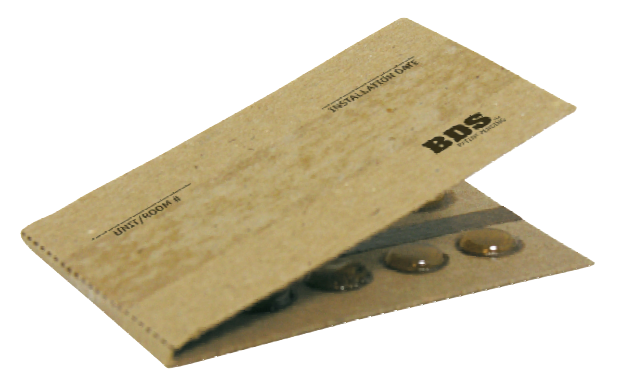
The Catchmaster BDS bed bug detection system is a patented monitor designed to pick up bed bugs before they proliferate and establish in a new location. Made by AP&G, the BDS mimics the conditions bed bugs treat as ideal harbourage and holds any that investigate it on an adhesive surface, giving pest managers a low-cost way to run ongoing detection programs across many rooms.

How the BDS works
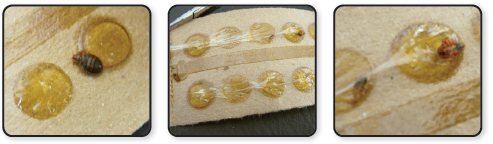
Bed bugs seek out tight, dark tunnels and rough, woody material: the flutes of corrugated cardboard, mattress seams and the joints of timber furniture are typical examples. Through research into bed bug biology, AP&G developed a monitor that imitates these textures and spaces. Bed bugs nearby are drawn into the BDS and held on its patented dot-matrix adhesive, where they can be identified during inspection.
Key features
- Patented design that simulates preferred bed bug harbourage.
- Dot-matrix adhesive traps bed bugs that enter.
- Priced at a fraction of other monitors, so it can be deployed in every room of a hotel or every unit in an apartment complex.
- Compact: each monitor measures approximately 4.6 cm by 15.9 cm.
- Supplied as 6 placements per sheet, 12 sheets per box, 4 boxes per case (288 placements per case). Item CM-BDS-72.
Where to use it
The BDS is a detection device and belongs anywhere people sleep, sit or gather in numbers:
- Hotels, motels, backpacker hostels and resorts
- Multi-unit dwellings and apartment complexes
- Aged-care and long-term care facilities
- Offices, schools and boarding accommodation
- Public transport
Why early detection matters in Australia
Bed bugs have re-established across Australia since the late 1990s, spreading through travel and second-hand furniture, and many local populations are resistant to pyrethroid insecticides. A single introduced female can found an infestation within weeks, and by the time guests complain the bugs have usually spread to adjoining rooms. Detecting a small population early keeps treatment confined to one room, limits reputational damage for accommodation operators and reduces the amount of insecticide needed.
Using the BDS in an IPM program
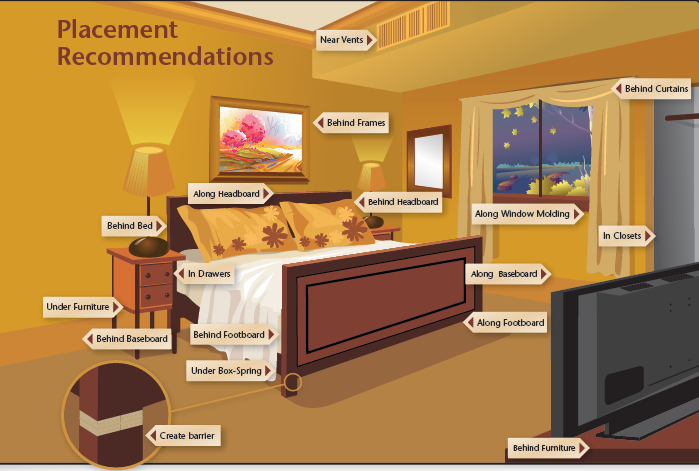
- Baseline. Install monitors in every room or unit and record their positions.
- Inspect. Use the monitors as the focal point of regular inspections by a trained technician. A monitor with captures confirms activity to the client beyond doubt and points to where bed bugs are harbouring.
- Treat. Where bed bugs are confirmed, carry out a full inspection and treatment program in line with the Australian bed bug code of practice.
- Verify. Reinstall BDS monitors after treatment to demonstrate the treatment has worked and to catch any post-treatment activity.
A negative reading on a BDS does not guarantee a room is free of bed bugs. The monitor is one part of a strategy, not a substitute for a trained inspection.
A proactive service offer
Because the BDS is cheap enough to deploy at scale, it lets a pest management company sell regular, scheduled bed bug inspection contracts to accommodation and property managers rather than only responding to emergency call-outs. Documented monitoring is also valuable evidence for operators facing guest complaints.
Downloads
Available from Garrards
Catchmaster BDS monitors are available through Garrards branches. Contact your branch for case pricing and for insecticides, mattress encasements and other bed bug management products.
Contact your local Garrards branch
Frequently asked questions
Is the BDS a bed bug treatment?
No. The BDS is a detection and monitoring device. It helps you find bed bugs early and confirm treatment success, but infestations still need a full inspection and treatment program.
If a BDS monitor is empty, does that mean the room has no bed bugs?
Not necessarily. A negative reading does not guarantee there are no bed bugs; the monitor should be used as the centre point of a trained inspection.
How is the BDS packed?
Each sheet carries 6 placements; there are 12 sheets per box and 4 boxes per case, giving 288 placements per case (item CM-BDS-72).