
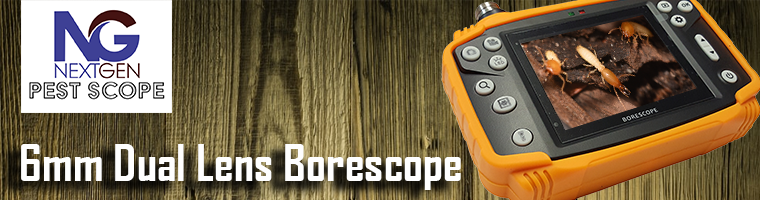
The NEXTGEN Pest Scope is a 6 mm dual-lens borescope developed by NEXTGEN, a manufacturer of professional pest control products for the Australian market, specifically for professional termite inspections. It lets a technician look inside wall cavities, subfloor voids, roof spaces and behind fixtures through a small entry hole, turning a suspected termite lead into visual evidence without opening up the wall.

Key features
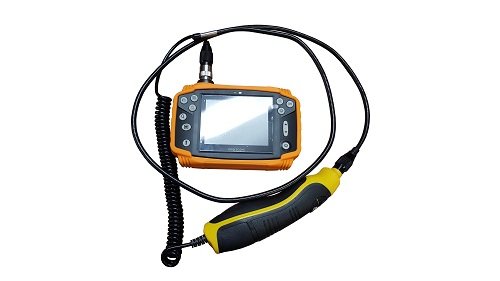
- 1 m soft, flexible tube with a 6 mm diameter dual-lens camera probe.
- Dual lens: a forward-facing lens and a side-facing lens, so you can view along the cavity and across the face of studs and plates without twisting the probe.
- Probe rated IP67 against dust and water immersion.
- 4 front LEDs and 2 side LEDs, each with high, medium and low brightness settings.
- 640 x 480 pixel camera probe.
- 3.5 inch TFT colour screen.
- Captures 1600 x 1200 photos and 640 x 480 video for inspection reports.
- Rechargeable 3.7 V battery, USB charging cable and soft carry case included.
Where it fits in a termite inspection
A visual termite inspection in Australia is carried out to AS 3660.2 and AS 4349.3, which limit the inspector to accessible areas. A borescope extends what counts as visible: through a 6 to 8 mm hole in plasterboard, skirting or a subfloor vent you can check the bottom plate, noggings and the inside face of a cavity where subterranean termites such as Coptotermes typically enter from the slab edge or a mud lead. Typical uses include:
- Confirming activity behind a wall where a moisture meter or thermal camera has flagged an anomaly.
- Inspecting inaccessible subfloor and roof void areas via small openings.
- Checking inside timber posts, door frames and window reveals.
- Photographing evidence for the inspection report and for the client.
- Post-treatment checks to confirm activity has ceased before making good.
Tips for use
- Locate cables and pipes before drilling access holes, and keep holes small so they can be filled and touched up.
- Start on the low LED setting; high output can wash out close timber surfaces.
- Use the side lens to scan the face of framing members while advancing the probe slowly.
- Record photos with a location note so they can be placed in the report.
- Wipe and dry the probe after use in damp subfloors; the IP67 rating protects the probe but not a dirty lens.
Compliance note
A borescope is an aid to inspection, not a replacement for it. Inspection reports must still be prepared to the relevant Australian Standards and by technicians holding the timber pest inspection licence or accreditation required in their state or territory.
Downloads
Available from Garrards
The NEXTGEN Pest Scope 6 mm dual-lens borescope is available from Garrards branches. Contact your branch for pricing and to see the unit in store.
Contact your local Garrards branch
Frequently asked questions
What does 'dual lens' mean on the NEXTGEN Pest Scope?
The probe has two cameras: one facing forward along the tube and one facing sideways. You can view down a cavity and across the face of framing without rotating the probe.
Can the Pest Scope record images for reports?
Yes. It captures 1600 x 1200 photos and 640 x 480 video, which can be transferred for use in inspection reports.
Is the probe waterproof?
The scope probe is rated IP67, meaning it is dust-tight and protected against temporary immersion. Dry and clean it after use in damp areas.