
PelGar International manufactures anticoagulant rodenticide baits, and Garrards supplies its professional range to Australian pest managers. The line that makes PelGar worth a look is Roban: a difenacoum bait block, an active that is uncommon in Australia and that gives you a genuinely different option when non-target risk is the constraint on a job.
About PelGar
PelGar was founded in 1995 to produce rodenticide and insecticide formulations for the global public health market, drawing on the experience of its two directors, Dr Gareth Capel-Williams and Dr Jonathan Wade, in government organisations and multinational companies. The company invests in research, development and manufacturing capability for new formulations and applies its own quality control standards.
PelGar manufactures baits built on three anticoagulant actives: bromadiolone, brodifacoum and difenacoum.
Why difenacoum is worth knowing about
Bromadiolone and brodifacoum are commonplace in Australia. Difenacoum is not, and PelGar reports it has a distinctive toxicity profile: more than twice as effective on mice as bromadiolone baits, while being considerably less toxic to non-target animals such as dogs and birds.
That combination matters on Australian jobs where secondary poisoning risk drives the decision – baiting around homes with pets, schools and childcare grounds, rural sheds with working dogs, sites near raptor habitat, and any client who has asked what happens if a bait-fed rodent is eaten by something else. It does not remove the need for secured stations, bait accounting and carcass collection; it changes the size of the risk you are managing.
PelGar products stocked by Garrards
Brigand Rodenticide Blocks
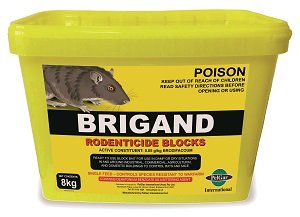
- Active constituent: 0.50 g/kg brodifacoum
- Use: ready-to-use block bait for damp or dry situations, in and around industrial, commercial, agricultural and domestic buildings, to control rats and mice.
Roban Rodenticide Blocks
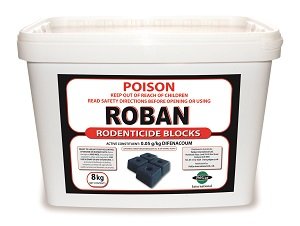
- Active constituent: 0.05 g/kg difenacoum
- Use: ready-to-use bait for the control of brown or Norway rats (Rattus norvegicus) and mice, including those resistant to other anticoagulants, in damp or dry situations in and around industrial, commercial, agricultural, public service and domestic buildings.
Where these fit in a rodent program
Australia’s three commensal rodents – the Norway rat, the roof rat and the house mouse – behave differently, and block baits are only one part of the answer. Rodent pressure in Australian commercial premises is usually driven by harbourage, spilled product and open access points, so a durable result comes from proofing and hygiene with baiting used to knock the population down, not the other way around. Block baits with a central securing hole suit ongoing programs because they can be anchored inside stations and audited at each service visit.
Where anticoagulant resistance is suspected, note that the Roban label covers rodents resistant to other anticoagulants – but confirm the identification and the baiting history before switching actives, and record what you used and where.
Safety and compliance
Both products are rodenticides for professional use and must be APVMA-registered and used strictly in accordance with the label. Second-generation anticoagulants carry a real secondary-poisoning risk to pets, livestock and native predators such as owls and raptors, so place bait only in secured, tamper-resistant stations, keep a bait plan, remove uneaten bait at the end of the program, and search for and dispose of carcasses. Commercial rodenticide use is restricted to licensed pest management technicians under state and territory legislation. Always work from the current label and Safety Data Sheet.
Available from Garrards
PelGar Brigand and Roban blocks are available from Garrards branches. Contact your nearest branch for current pack sizes, pricing and the latest labels and Safety Data Sheets.
Contact your local Garrards branch
Frequently asked questions
What is the difference between Brigand and Roban?
Brigand blocks contain brodifacoum and Roban blocks contain difenacoum. Both are ready-to-use block baits for damp or dry situations in and around buildings. PelGar reports difenacoum is more than twice as effective on mice as bromadiolone while being considerably less toxic to non-target animals such as dogs and birds.
Can these be used where rodents are resistant to other baits?
The Roban label covers brown or Norway rats and mice including those resistant to other anticoagulants. Confirm the identification and the baiting history before switching actives, and always work from the current label.
Do the blocks need to go in a bait station?
Yes – use secured, tamper-resistant stations. Both products are anticoagulants with a secondary-poisoning risk to pets, livestock and native predators, and label directions and state licensing requirements apply.