
Australian professional pest managers are spoilt for choice when it comes to cockroach gel bait: a wide range of toxicants, bait matrices and colours, each with its own product claims. This guide, based on recommendations from Envu, cuts through the marketing by grouping gels into three use categories and setting out the ‘must have’ attributes for each, so you can match the gel to the job.

Three categories of cockroach gel
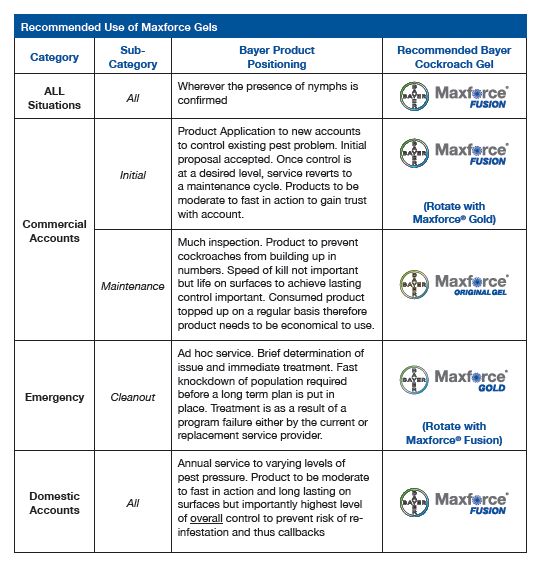
The Australian cockroach gel market falls into broad use categories determined by where the gel is used (domestic or commercial) and what it is used for (cleanout or maintenance). Each category calls for a different balance of speed of kill, attractiveness and cost.

Maintenance gels
Maintenance gels are placed most often in commercial accounts to control low to moderate, developing cockroach populations. They usually follow a knockdown or cleanout programme that has already brought numbers down to manageable levels. Because they are applied more frequently and over longer periods than premium gels, they are the gel used most in commercial work and should be lower in cost per tube. They are also a useful rotational partner for other gels in the programme, which helps to prevent insecticide resistance.
Domestic gels
Domestic gels are mostly applied on a 12-month service interval, so the number one requirement is that they stay effective and attractive on surfaces for a long time. Sustained attractancy over months matters more than very high attractancy over a short period. The toxicant should be moderate to fast so resident populations are controlled, but it does not need to knock down the large numbers typical of commercial accounts.
Cleanout or premium gels
Cleanout gels combine premium toxicants with highly attractive bait matrices to reduce cockroach populations rapidly. Laboratory trials of gels in this class typically show 90 per cent or better control between 12 and 24 hours, which translates to a noticeable field reduction of around 70 per cent or more within 24 hours. High attractancy is critical so the toxicant can do its work in the shortest possible time.
White versus brown gels
This is a common question and, in practice, colour does not matter. Some technicians choose white gels for domestic work because placements are less visible in white melamine cupboards, but careful placement overcomes the contrast of a brown gel on a white surface. A gel’s colour comes from the combination of its food components, not from added colouring agents. If colour is important to you, simply make sure the gel you pick still does the job it is intended for.
Summary: what to look for
| Gel category | Speed of control | Attractiveness on surface | Cockroach population at application |
|---|---|---|---|
| Maintenance | Slow to moderate | Important, but placements are replaced monthly during service | Low to moderate |
| Domestic | Moderate to fast | At least moderate over a long period | Low to moderate |
| Premium / knockdown | Fast (under 24 hours) | Critical, especially initially | Moderate to high |
Placement advice from Envu
- Many small placements are better than a few large point sources.
- Think about cockroach behaviour. German cockroaches forage close to harbourage, so place gel in cracks, crevices, corners and the junctions of cupboards where foraging cockroaches will contact it.
- Match the gel to the job. Do not use a maintenance gel where a cleanout gel is needed, and do not waste money on a premium gel when the job calls for a maintenance gel to manage low numbers.
- Categorise the product you use now. Are you using it as it was designed?
Caring for your gels and baits
- Gels contain food ingredients. Although stabilised, they do not like direct sunlight, which breaks down both the matrix and the toxicant. Extreme exposure can cause bait separation, poor attractiveness or reduced activity.
- Minimise heat. Do not carry more gel in the vehicle than you expect to need, particularly through an Australian summer.
- Avoid contamination by other products in the vehicle. Store gels in a dedicated bait compartment, bag or box.
Gels within an IPM programme
Gel baits work best as part of an integrated programme: inspect and monitor with sticky traps to gauge population and locate harbourages, address sanitation and moisture with the client, seal harbourages where practical, and rotate between gels with different modes of action to reduce the risk of resistance and bait aversion. All gels must be APVMA-registered and applied according to the label by a licensed technician.
Available from Garrards
Garrards stocks the Envu cockroach gel range and a wide selection of maintenance, domestic and cleanout gels from other suppliers. If you have questions about which gel suits a particular account, talk to your local branch.
Contact your local Garrards branch
Frequently asked questions
How fast does a cleanout cockroach gel work?
Laboratory trials of premium cleanout gels typically show 90 per cent or better control within 12 to 24 hours, which usually means a visible field reduction of around 70 per cent or more within a day.
Is white cockroach gel better than brown gel?
No. Colour comes from the food ingredients in the matrix, not added dyes, and has no bearing on performance. Careful placement hides a brown gel on white surfaces.
Why rotate cockroach gels?
Rotating between gels with different toxicants and bait matrices reduces the chance of insecticide resistance and bait aversion building up in a population, particularly in long-running commercial accounts.