
The Queensland Government revised the Red Imported Fire Ant Restricted Area with effect from 1 March 2014, moving several south-east Queensland suburbs between the high-risk and low-risk zones and removing others altogether. For pest managers, landscapers and any business that moves soil, mulch or plant material, the fire ant restricted area determines what movement controls apply and whether an approved risk management plan is needed.
What changed on 1 March 2014
Restricted-area boundaries are adjusted as new infestations are detected and as areas are cleared following completion of all required treatment and surveillance. The March 2014 revision made the following changes:
- Removed from the restricted area (no longer subject to movement controls): Edens Landing, Holmview, Loganholme, Sherwood and Tanah Merah.
- Moved from high risk to low risk (reduced movement controls): Corinda, Mount Marrow, Shailer Park and The Bluff.
- Moved from unrestricted to low risk (new obligations for businesses): Blacksoil and Pine Mountain.
- Moved into the high-risk area (obligations for both residents and businesses): Brassall.
What it means for pest managers and businesses
Movement controls apply to materials that can carry fire ants – such as soil, mulch, potting media, turf and plant material – when they leave a restricted area. Businesses operating in the high-risk and low-risk zones must manage these materials under an Approved Risk Management Plan. Businesses in Blacksoil, Pine Mountain and Brassall in particular needed to review their obligations after the 2014 change.
At the time, the Queensland Department of Agriculture, Fisheries and Forestry advised businesses to review their Approved Risk Management Plan because inspectors would be carrying out spot audits over the following months.
Identifying red imported fire ants
Red imported fire ants (Solenopsis invicta) are a notifiable biosecurity pest in Queensland. Key identification points:
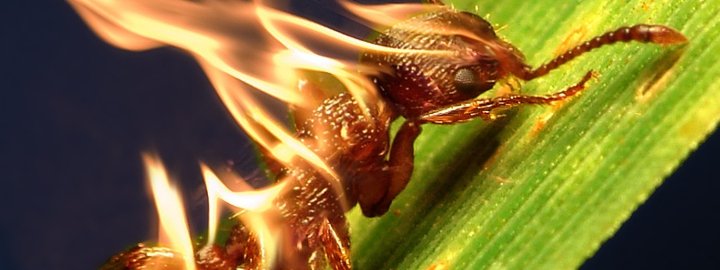
- Small ants, roughly 2–6 mm long, with a coppery-brown head and body and a darker abdomen.
- Ants of many different sizes present in the same nest – a distinctive feature compared with most native ants.
- Nests are dome-shaped mounds of loose, crumbly soil with no visible entry hole, often in open, sunny areas such as lawns, paddocks, footpaths and garden edges.
- Aggressive when disturbed, swarming rapidly and inflicting a painful, fiery sting that raises small pustules.
Suspected fire ants should not be treated with general ant products. Report them so the sighting can be confirmed and treated under the eradication program, and do not move nest material.
Action required
- Check whether your depot, storage yard and the sites you service fall inside the current restricted area.
- Review your Approved Risk Management Plan, or apply for one if you now operate in a restricted zone.
- Train staff to recognise fire ants and to follow the movement controls for soil, mulch and plant material.
- Complete the free fire ant training offered by the department, which covers legal obligations, how to update or apply for a Risk Management Plan, and fire ant surveillance and identification.
Downloads
Contact
For advice on your Risk Management Plan, Garrards customers in 2014 were directed to a fire ant inspector on 3310 2852 or to Garrards on 3881 1693, with training bookings on 3310 2873. Because boundaries and contact details change, check the Queensland Government fire ant program for the current restricted-area map, declaration notice and movement-control requirements before relying on the details above.
Available from Garrards
Garrards’ Queensland branches can advise on ant identification, fire-ant-aware work practices and registered products for the ants you are licensed to treat.