
Effective spider control starts with two questions: which spider are you treating, and what outcome does your customer actually expect? There are competing views in the Australian industry. Some say spiders are only controlled by direct contact at the time of treatment; some manufacturers have claimed more than 18 months of control in trials; and many experienced pest managers hold that you should contact as many spiders as possible on the day, with residual control coming largely from suppressing the flies and moths that spiders feed on.

How much identification do you need?
Identify the pest to the level that improves the treatment. Identification only matters if it tells you something about life cycle, habits and potential danger that changes what you do. For most jobs it is enough to separate:
- Ground-dwelling spiders such as funnel-webs, which are venomous and live in burrows.
- Red-backs, which are scattered across a site and hide in voids.
- House-bound webbing spiders versus garden spiders such as orb weavers that only use the house as one anchor for their web.
- Spider look-alikes such as daddy long legs (harvestmen), which are not true spiders and are not susceptible to some products.
Your desired outcome is set by the customer. Someone who just wants activity dampened may be happy with a quick spot spray. A customer who has been promised a 12-month warranty expects freedom from spiders, and will be disappointed by anything less. If you write “spiders” on the quote, the customer expects you to treat all of them.
Treatment by spider type
Ground-dwelling spiders (e.g. funnel-webs)
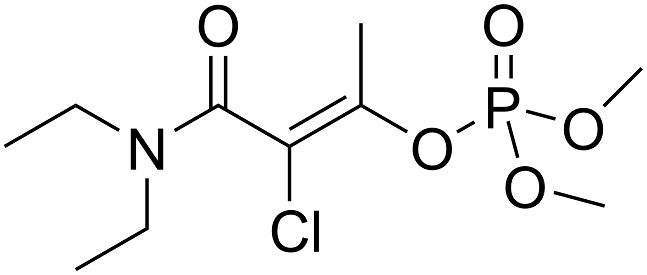
The aim is to dramatically reduce numbers without exciting the spiders to roam into people areas. A sub-lethal dose of a synthetic pyrethroid (SP) will cause funnel-webs to wander and seek shelter, possibly in a shoe in the laundry. Organophosphates (OPs) do not excite the spiders and are better suited to ground-dwelling species, where registered.
Red-backs: search and destroy
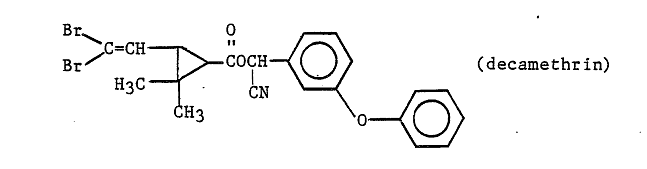
Red-backs build a characteristic untidy web, sticky at the top to catch prey and non-sticky below as living quarters. Because they are so scattered, a thorough inspection of every site of activity is essential, and both spiders and egg sacs must be controlled. Where webbing is on the house, red-backs often shelter inside weep holes; dust these with a powerful duster fitted with a weep-hole attachment. Red-backs in roof voids dropping from downlights can be treated by dusting or misting the void; permethrin dusts are registered for spider control and work well here. SPs will flush red-backs from nooks and crannies. The most common place to find red-backs on a call-back is exactly where they were last time, which usually means the first treatment was not thorough.
Webbing spiders
Separate house-bound spiders from garden spiders that merely anchor a web to the building. There is little to be gained from treating orb weavers in the garden. House-bound webbing spiders are treated as described below.
Daddy long legs
Thin-legged “spiders” that bounce their body when disturbed are harvestmen, not true spiders. Historically, complaints that an OP product was “not killing spiders” almost always turned out to involve daddy long legs. Identify them before selecting a product.
Brick versus weatherboard: choosing a formulation
Spiders on brick houses hide in weep holes and around window and door frames. Weatherboard houses offer far more harbourages, often with a crack between every board. Small droplet size and higher pressure improve crack-and-crevice penetration but increase drift risk. Two points from the labels:
- Rates depend on equipment and surface. Many labels require double the formulation when using a pneumatic hand-pump sprayer compared with a mechanical (truck-mounted) pump, because the mechanical pump delivers roughly twice the spray volume, so the same amount of active reaches the surface. Some labels (Cislin, for example) also separate rates for porous and non-porous surfaces: porous surfaces take half the product in double the spray volume. Non-porous painted weatherboard runs off; brick absorbs much more. Some labels such as Biflex promote a two-part spider treatment, a crack-and-crevice application to draw spiders out followed by an overall band spray, which has clear advantages if you are prepared to go around the building twice.
- Match the formulation to the surface. Consider a solvent-based SP emulsifiable concentrate (EC) for weatherboard homes and an SP wettable powder (WP), suspension concentrate (SC) or capsule suspension (CS) for brick. SP ECs stir up activity, draw spiders from their hiding places and give rapid knockdown; on painted timber the EC stays on the surface and gives some residual. On brick, ECs are drawn below the surface and become unavailable, whereas WP, SC and CS formulations stay on the surface and give residual control of the spider’s food source. Wall cavities behind weep holes should be treated with an electric duster.
SP ECs give spectacular results on the day but probably poorer residual, which matters if the customer expects 12 months. Note that some buildings are simply not reinfested quickly, which can make a product appear to give long residual when it is really a lack of reinfestation. The flushing action of bifenthrin is promoted as being less than other SPs; that can be a disadvantage compared with permethrin ECs where flushing is important. Many pest managers use Biflex for spiders through their termite rig because it is convenient and results are generally good, but termite equipment is built for high volume at low pressure, whereas spider work is lower volume at higher pressure and needs smaller hoses and different nozzles.
Wetting agents
The belief that a wetting agent helps penetrate the spider’s cuticle dates from the era of organochlorines, OPs and less refined formulations. Most current products do not need one for spider control. If you do add a wetting agent, avoid vegetable-based products, which stay sticky on the building, attract dust and make the house look dirty.
When to remove webs
- Well before (at least a fortnight): probably optimal, as spiders partially rebuild and less webbing is forced onto the building, but few companies can schedule this.
- Immediately before: not recommended. Spiders retreat into cracks and cavities and are harder to contact.
- About a week after: leave webs in place at treatment for good contact, then brush them off (do not wash) roughly a week later so webless spiders must cross the residual deposit.
Spot treatment versus full coverage
A spot treatment only dampens activity. If you offer a warranty or free service period, that implies a complete treatment. If residual control comes from killing the food source, a spot treatment delivers no ongoing protection.
Setting a realistic free service period
Reinfestation pressure varies: urban blocks surrounded by trees and lush gardens are reinfested faster than isolated properties, weatherboard homes have more harbourages, and some actives last longer than others. Many companies ignore this and set a 12-month warranty purely for marketing, so they can call back in 12 months for repeat business. The risk is the recall at your cost, or worse, a customer telling friends the treatment failed.
Consumers expect to be problem-free for a stated warranty period, just as with a car, an appliance or a termite treatment. As customers become savvier, more will invite you back under warranty. A sensible alternative is a shorter free service period combined with a recommendation for annual treatment. This satisfies the marketing purpose of the annual call while matching the real residual life of the treatment. The dog-wormer model is a fair comparison: instant kill, no residual, three-monthly re-treatment recommended. The difference is that your customer can see a spider rebuilding its web on their pride and joy.
Safety and compliance
All spider control products must be registered with the APVMA and used strictly according to the label, including rates, surfaces and equipment restrictions. Pest managers must hold the appropriate state or territory pest management licence. Wear the PPE specified on the label and SDS, and manage drift when using fine droplets at high pressure near neighbours, gardens and waterways.
Available from Garrards
Garrards supplies a full range of APVMA-registered spider control products, including SP and dust formulations, along with dusters, weep-hole attachments and spray equipment suited to crack-and-crevice work. Our branches can help you choose the right formulation for the construction type and warranty you are offering.
Contact your local Garrards branch
Frequently asked questions
Should I use a synthetic pyrethroid on funnel-web spiders?
Take care. A sub-lethal dose of an SP can excite funnel-webs into roaming and seeking shelter in people areas. Organophosphates, where registered, do not excite ground-dwelling spiders and are generally preferred.
Why did my spider treatment not kill the daddy long legs?
Daddy long legs are harvestmen, not true spiders, and are not susceptible to some products, particularly certain organophosphates. Identify them before choosing a product.
When should spider webs be removed?
Leave webs in place at the time of treatment so spiders are contacted, then brush them off about a week later so webless spiders must cross the residual deposit. Do not wash them off.
Which formulation is best for brick homes?
Wettable powder, suspension concentrate or capsule suspension formulations stay on the brick surface and give residual control. Emulsifiable concentrates are drawn into porous brick and lose residual activity.