
Dust mites are present in most homes along Australia’s humid coastal fringe. They are tiny, rarely noticed unless they crawl across a dark surface, and once a client spots one they often find many more. Dust mites are not a pest in the usual sense, but they are a significant source of allergens, and pest managers are regularly asked to help control them.
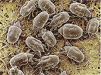
What dust mites are and where they live
House dust mites are microscopic arachnids, related to spiders and ticks, that feed on protein such as shed human and animal skin. They absorb moisture from the air rather than drinking, so they thrive where relative humidity stays high and struggle in dry conditions. That is why they are far more abundant in coastal and subtropical parts of Australia than in dry inland regions.
Populations build up wherever people spend time on surfaces that are not smooth: mattresses, pillows and bedding, upholstered lounges, carpet and rugs, curtains, soft toys, and items such as combs and brushes that collect skin flakes. A single mattress can support a very large population.
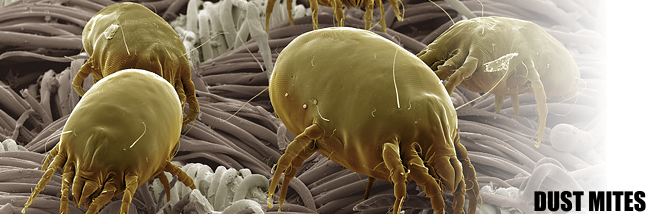
Identification
- Size: roughly 0.2 to 0.4 mm, so individual mites are effectively invisible except against a dark background.
- Appearance under magnification: pale, translucent, oval body with eight legs and no wings.
- Dust mites do not bite. Itching or skin reactions attributed to ‘bites’ are usually allergic responses or are caused by another pest, so rule out fleas, bird mites and bed bugs before treating.
- Confirmation is by microscopic examination of dust samples, or by inference from allergy symptoms that improve when bedding is encased and humidity is reduced.
Why dust mites matter
Most people never notice dust mites, but some are sensitive to the live mites, their faeces and their cast skins. When numbers build up, these allergens can trigger allergic rhinitis, asthma and eczema symptoms, particularly in children and in people who spend long periods in bed. Dust mite allergen is one of the most common indoor allergy triggers in Australia, which is why clients with allergy sufferers in the household often seek professional help.
Managing dust mites
Dust mites are very hard to eliminate from a property. The realistic goal is to keep numbers at low levels through a combination of strategies. Pest management treatments can aid a short-term reduction, but long-term minimisation depends on the household adopting several measures at once:
- Reduce humidity. Aim for indoor relative humidity below 60 per cent where possible, using ventilation, dehumidifiers or air conditioning, and fixing leaks and rising damp.
- Reduce non-smooth surfaces. Replacing carpet with hard flooring, and heavy curtains with blinds, removes major harbourages.
- Encase mattresses and pillows. Allergen-proof covers separate the sleeper from the mite population inside the mattress.
- Wash regularly in hot water. Bed linen, blankets and soft toys should be washed in hot water, or water containing essential oils, to kill mites and remove allergen.
- Clean and vacuum thoroughly and often. A vacuum cleaner with a HEPA filter reduces the allergen recirculated into the air.
The pest manager’s role
A professional service typically involves an inspection to identify the main reservoirs, advice to the client on the measures above, and where appropriate a treatment of mattresses, upholstery and carpets with an APVMA-registered product labelled for dust mites, applied by a licensed technician according to the label. Set realistic expectations: treatment reduces numbers but does not remove the allergen already present, and without humidity and cleaning measures populations will recover.
Available from Garrards
Garrards branches can advise on registered products and equipment suitable for dust mite treatments and on the safety and label requirements that apply. Talk to your local branch about the options for your clients.
Contact your local Garrards branch
Frequently asked questions
Do dust mites bite?
No. Dust mites do not bite or burrow. Symptoms come from an allergic reaction to the mites, their faeces and cast skins. If a client reports bites, look for fleas, bird mites or bed bugs instead.
Can dust mites be eliminated completely?
Not realistically. The goal is to keep numbers low through humidity control, mattress and pillow encasement, hot washing, reducing carpet and soft furnishings, and regular thorough vacuuming, with treatment as a short-term aid.
What humidity level controls dust mites?
Keeping indoor relative humidity below about 60 per cent, if achievable, makes it difficult for dust mites to absorb the moisture they need and slows population growth.