
Processionary caterpillars are one of the more unusual causes of a pest call-out, yet they can shut down a workplace or school almost overnight. In the first six weeks of the 2008 school year, a high school in the Brisbane area sent 52 students home with unexplained itching, and eight of them needed medical treatment. This case study shows how a pest manager tracked down the cause and why hairy caterpillars deserve a place on every inspection checklist.
The problem: mystery itching across the school grounds
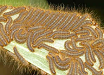
Students complained of being “bitten” in several parts of the grounds. Some had noticed hairy caterpillars on an outdoor table, but a search of that area turned up nothing. The school engaged a pest management company, who checked the wattle trees on site because wattles are a well-known host for the bag-shelter moth. Again, no caterpillars were found.
The symptoms, however, pointed strongly to the stinging (urticating) hairs of caterpillars. The question was where the caterpillars actually were.
Finding the infested trees
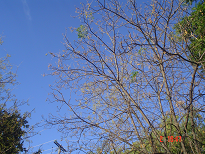
The quickest way to locate an infestation is to look for feeding damage on the newest leaves. Processionary caterpillars strip the foliage around the outer edge of the canopy, leaving a skeletonised appearance that is easy to spot once you know what to look for.

Following the damage, the pest manager found the bag shelters and caterpillars on the trunk roughly five metres above ground level. Other trees of the same species were then checked: all twelve carried masses of caterpillars, and their locations matched the areas of the grounds where students had been complaining.
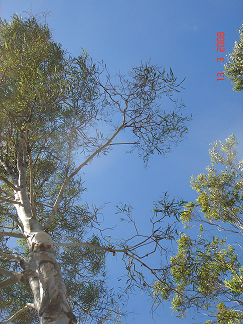
The company removed the caterpillars and treated the trees using a cherry picker to reach the nests safely.
Not just a coastal problem
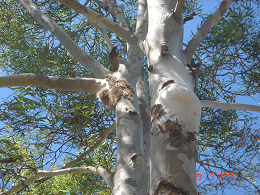
Hairy caterpillars are not confined to coastal Queensland. In April, a pest manager carrying out a timber pest inspection in Moree, in north-western New South Wales, noticed the cast-off skins and webbing of hairy caterpillars on trees beside an office. He asked the staff whether anyone had experienced “itches”. They had, early in the new year, but had put it down to something else.
That insight impressed the client, and the pest manager now has a tree treatment booked every November, ahead of the peak season: a good example of local pest knowledge turning a routine inspection into recurring work.
Biology: why the hairs keep on itching
Several Australian caterpillar species carry stinging hairs, and their life cycles are broadly similar:
- The caterpillars overwinter in a cocoon and pupate in spring, with the adult moth emerging several weeks later.
- Larvae feed on the leaves of particular host trees and pass through up to eight moults as they grow.
- When they exhaust one tree, they leave en masse in single file to find another, which is why they are called processionary caterpillars.
Every stage of the life cycle carries irritating hairs: eggs, larvae, cast larval skins, pupae and adults, as well as the silken bag shelter itself. The hairs are tapered and barbed, so they penetrate skin easily, and they release an irritant when they break. The result is an itchy dermatitis that can affect people who never touched a caterpillar, because shed hairs are carried on the wind and settle on surfaces, clothing and play equipment.
The bag-shelter moth, whose caterpillars are the classic processionary species, favours wattles. The white cedar moth attacks white cedar (also known as Cape lilac), a common street and garden tree in many inland towns. The Queensland Museum publishes a fact sheet on bag-shelter moths and processionary caterpillars at www.qm.qld.gov.au.
Inspection checklist for pest managers
- Ask about symptoms. Unexplained itching or rash among a group of people, especially in late summer and autumn, is a strong lead.
- Map the complaints. Areas where people are affected usually sit beneath or downwind of host trees.
- Look up, not just down. Check for skeletonised outer foliage and look for bags, webbing and cast skins on trunks and major limbs, often several metres above ground.
- Check every tree of the same species on the site, not just the obvious one.
- Plan access. Nests high in the canopy may require an elevated work platform and appropriate fall-protection controls.
Safety and compliance
Anyone removing nests or treating infested trees should wear coveralls, gloves, eye protection and a suitable respirator, because disturbing a nest releases clouds of loose hairs. Contaminated clothing should be bagged and laundered separately. Any insecticide applied to trees must be registered with the APVMA for that use and applied strictly according to the label, and the operator must hold the appropriate state or territory pest management licence. Work at height from a cherry picker or elevated work platform is regulated under state work health and safety law, so use trained, licensed operators.
Available from Garrards
Garrards supplies the personal protective equipment, application equipment and APVMA-registered insecticides that Australian pest managers use for tree and outdoor pest work. Talk to your branch about the right products and PPE for caterpillar jobs.
Contact your local Garrards branch
Frequently asked questions
Why could nobody find the caterpillars at the school?
The nests were on tree trunks about five metres above the ground, well above where people normally look, and the initial searches focused on the wrong trees. Following the leaf damage led straight to them.
Can you get the rash without touching a caterpillar?
Yes. The hairs from larvae, cast skins, pupae, adults and the bag shelter are all irritating and can be carried by wind onto skin, clothing and surfaces.
When is the best time to treat host trees?
Treatment is most effective when caterpillars are small and active on the tree. In the Moree example the client booked an annual visit each November, before the peak of complaints in the new year.