
Cockroach monitor traps are a mainstay of modern integrated pest management (IPM). In many commercial kitchens, food manufacturing sites and healthcare facilities they are now the expected method of detecting and tracking cockroach activity, and in some accounts they are the only acceptable control device. The rega Slim cockroach monitor is available from all Garrards branches.
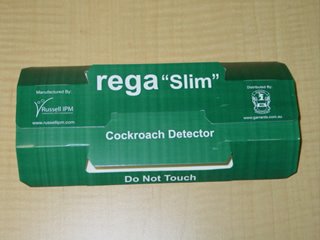
What the rega Slim is
The rega Slim is a low-profile sticky monitor designed to be placed where cockroaches congregate. It can be used purely as a monitoring device, to show when and where a cockroach problem exists, or as a control device that removes cockroaches as they travel. Each pack contains 10 traps together with cockroach attractant tablets, and every 10-pack is individually shrink-wrapped to keep the adhesive fresh until it is needed.
Why monitoring matters in Australian cockroach management
The German cockroach (Blattella germanica) is the main indoor pest in Australian food premises, while the American, Australian and smoky-brown cockroaches are more often found in drains, subfloors, gardens and roof voids and move indoors from there. Cockroaches are rarely spread evenly through a building. Once they find a suitable harbourage with warmth, moisture and food they concentrate there, leaving periodically to forage. Monitors reveal those harbourages so that treatments can be targeted rather than applied blanket-fashion, which is the foundation of an IPM approach and a requirement of many food safety audit programs.
Step-by-step: monitoring with rega Slim traps
- Inspect the whole facility thoroughly. Define the area to be inspected on a site map and work through it systematically from floor to ceiling so no potential harbourage is overlooked.
- Focus on preferred cockroach habitat: near and under sinks and stoves; in or near motors of refrigerators, dishwashers and other appliances; in or near electric clocks, switch plates and conduits; next to computer and point-of-sale equipment; near leaking plumbing; near steam or hot-water pipes with insulating jackets; near drains; in drawers and cupboards; and in areas where packaged goods and equipment are delivered and stored.
- Place rega Slims throughout the facility and mark each one on the map or record it on a monitor trap log. Increase the density of traps in areas showing activity.
- Position traps near harbourages and along travel routes. Initially place traps at all suspected harbourages, water sources and runways. Avoid extremely dusty or wet locations, where the adhesive quickly loses its stickiness.
- Place traps flush against vertical surfaces. Cockroaches travel along edges where floors meet walls, so a trap that sits away from the wall may be bypassed entirely.
- Number and date every trap before deployment and mark its location on the map.
- Collect and count after 24 to 48 hours. Record the date and the number of cockroaches in each trap on the monitoring form, noting adults versus nymphs.
- Use the counts to pinpoint infestations. Traps with high catches indicate nearby harbourages, and this is where management effort should be concentrated. Large numbers of adults can signal an imminent population explosion.
- Keep monitoring after treatment. Inspect traps weekly or monthly depending on the severity of the problem, and continue after treatments to confirm whether control has worked or activity is rising again.
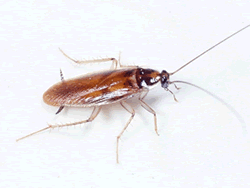
Inspecting after dark
Most inspections are done in daylight for the inspector’s convenience, but cockroaches stay hidden during the day, which makes it hard to judge the true size and location of the population. Schedule at least one inspection after dark when most of the population is active. This also shows the real standard of sanitation at a time when the premises are supposed to be clean.
Begin with the lights off if possible. A torch fitted with a yellow filter lets you observe cockroaches without disturbing them while they search for food, water and harbourage. Then turn on the lights and examine the areas where cockroaches were seen, and add the findings to your map.
Using monitor data in an IPM program
- Trap counts give an objective baseline before treatment and a measurable result afterwards, which is valuable evidence for food safety audits and client reports.
- Targeted gel baiting, dusting of voids or crack-and-crevice treatment can be directed to the harbourages the monitors identify, reducing pesticide use.
- Monitors detect re-introductions early, for example cockroaches arriving in cartons or with second-hand equipment.
- Persistent catches in one area usually point to a sanitation, moisture or structural issue that needs to be fixed by the client.
Safety and compliance
The rega Slim is a non-toxic adhesive monitor, so it can be used in sensitive accounts where pesticide use is restricted, including food preparation areas, healthcare and childcare facilities. Keep traps out of reach of children and pets, and refer to the Safety Data Sheet below for handling information. Commercial cockroach treatments that follow monitoring must be carried out by an appropriately licensed pest management technician using APVMA-registered products in accordance with the label.
Downloads
Available from Garrards
rega Slim cockroach monitor traps, along with cockroach gel baits, dusts, sprays and inspection tools, are available from every Garrards branch across Australia. Contact your local branch for pack quantities and pricing.
Contact your local Garrards branch
Frequently asked questions
How long should cockroach monitor traps be left in place?
Collect and count the initial traps after 24 to 48 hours to establish where activity is concentrated, then inspect ongoing monitors weekly or monthly depending on the severity of the problem.
Where is the best place to put a cockroach monitor?
Flush against a wall or vertical surface near warmth, moisture and food: under sinks, behind and beneath appliances, near drains and pipe penetrations, and along the floor-wall junction where cockroaches travel.
Are sticky monitors enough to control cockroaches?
Monitors show where cockroaches are and how many there are, and remove some as they travel, but a significant infestation usually needs targeted treatment and improved sanitation guided by the trap data.